

(Credit Scores, Credit Reports, and the “Character” Part of the 5 Cs)
If you read our first blog, The 5 Cs of Credit: How Lenders See Your Financial Story, you already know lenders don’t make decisions based on one single number. They look at your full financial picture through five categories: Capacity, Capital, Character, Collateral, and Conditions.
In this post, we’re diving deeper into one of the most talked-about (and often misunderstood) parts of that framework: your credit.
Credit plays a major role in borrowing decisions and understanding how it works can make applying for a loan feel much less stressful. Whether you’re hoping to buy a vehicle, apply for a credit card, or purchase a home, knowing what lenders are actually looking for helps you feel prepared rather than surprised.
Let’s break it down.
What Is Credit, Really?
At CCFCU, we define credit in one word: trust. Will a financial institution trust you to pay them back?
When you borrow money, the lender is taking a risk that you’ll repay it as agreed. Your credit history is the record that how you have paid in the past.
Credit helps lenders answer questions like:
- Do you pay bills on time?
- How much debt do you already carry?
- Have you borrowed responsibly before?
- Do you manage credit consistently over time?
In other words, your credit tells your story.
Credit Score vs. Credit Report: What’s the Difference?
One of the most important things to understand is that your credit score and your credit report are not the same thing.
Your Credit Report is a detailed record of your credit history. It includes things like:
- Credit cards
- Auto loans
- Mortgages
- Student loans
- Payment history
- Current balances
- Credit limits
- Collections
- Public records (if applicable)
Think of it like your financial “transcript.”
Your credit score is a number based on the information in your credit report. It’s designed to give lenders a quick snapshot of risk.
Your credit score answers the question:
How likely is this person to repay borrowed money on time?
So while your credit report is the full story, your credit score is the summary.
What Is a “Good” Credit Score?
Credit scores generally fall within these ranges:
- Excellent: 750+
- Good: 700–749
- Fair: 650–699
- Needs Improvement: 600–649
- Poor: Below 600
A “good” score can mean different things, based on what type of loan you’re applying for. Auto loans, mortgages, credit cards, and personal loans all have different guidelines. A score that qualifies you for one product might not qualify you for another, or it may affect your interest rate.
At CCFCU, we always encourage members to focus less on chasing a perfect score and more on understanding what their score means and how to strengthen it over time.
What Lenders Look for in Your Credit (The Main Factors)
Credit scores are calculated using several categories. Different scoring models weigh them slightly differently, but the main factors are consistent.
Here’s what lenders pay attention to most:
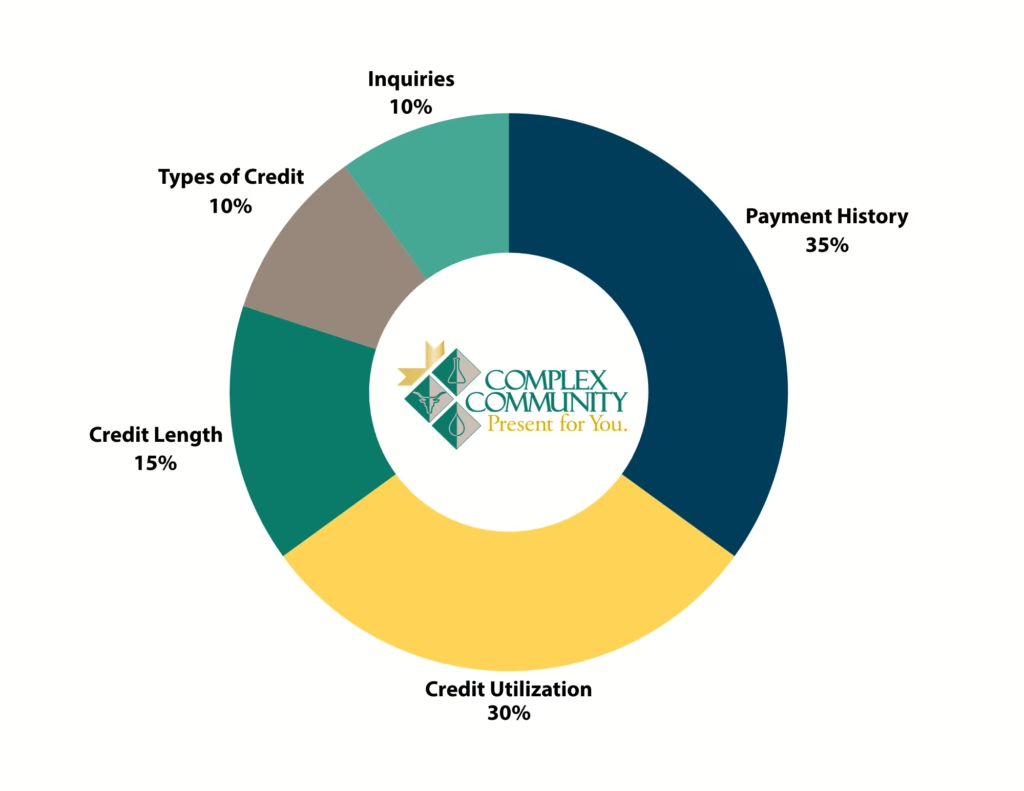
- Payment History (The Biggest Factor) – 35%
Your payment history is the single most important factor in your credit score, making up about 35% of your total score.
Lenders want to know: Do you pay your bills on time?
Making payments late or missing them entirely can have a major impact on your credit. Payments over 30 days late, multiple late payments, accounts sent to collections, and charge-offs are all red flags to lenders because they suggest a higher risk of not being repaid.
Even one missed payment can cause your score to drop, even if you’ve otherwise managed credit responsibly for years.
The good news is that lenders don’t just look at one moment, they look at patterns. A single late payment from several years ago won’t carry the same weight as multiple missed payments within the past few months.
The bottom line is that consistent, on-time payments are one of the best ways to build and protect a strong credit score.
- 2. Credit Utilization (How Much You Owe vs. Your Limit) – 30%
Credit utilization measures how much of your available credit you’re using.
Example:
If you have a credit card with a $1,000 limit and your balance is $800, you’re using 80% of your available credit.
In general, lenders prefer utilization to be 30% or lower.
Lower is even better, especially if you’re planning to apply for a loan soon.
This is one of the fastest ways to improve a score because reducing credit card balances can quickly make an impact.
One thing to note about credit utilization is the impact closing an account can have; closing a credit card can sometimes hurt your credit score because it reduces your total available credit, which can make your utilization percentage rise.
For example, let’s say you have:
- One credit card with a $2,000 limit
- Another credit card with a $3,000 limit
- Total available credit: $5,000
If you currently owe $1,000 between the two cards, your utilization rate is:
$1,000 ÷ $5,000 = 20% utilization
Now, if you close the card with the $2,000 limit, your total available credit drops to $3,000. If your balance stays the same ($1,000), your utilization jumps to:
$1,000 ÷ $3,000 = 33% utilization
That’s above the recommended range, and it could cause your credit score to drop, even though you didn’t charge anything new.
- Length of Credit History (Time Matters) – 15%
The longer you’ve been using credit responsibly, the more confident lenders feel.
This includes:
- How long your oldest account has been open
- The average age of all your accounts
Closing an account can also impact your credit score if it reduces the overall age of your credit profile.
Let’s go back to the same example where you have two credit cards:
- A $2,000 credit card (older account)
- A $3,000 credit card (newer account)
If the $2,000 card is the one you’ve had for 10 years and the $3,000 card is only 2 years old, closing the older card could lower your average credit age over time. That may make your credit history appear “younger,” which can lower your score.
Even if the closed account stays on your credit report for a while, it will eventually fall off and when it does, your credit history could lower if that was your oldest account.
That’s why closing an old credit card is often a decision worth thinking through carefully, especially if it has no annual fee and you’ve managed it responsibly.
- Types of Credit (Your Credit Mix) – 10%
Lenders like to see that you can manage different types of borrowing.
There are two main categories:
- Revolving credit (credit cards, lines of credit)
- Installment loans (auto loans, mortgages, student loans)
A healthy mix isn’t required to have good credit, but it can help show stability and experience.
- New Credit Inquiries (How Often You Apply) – 10%
Every time you apply for a new credit account, a “hard inquiry” may appear on your report.
A few inquiries aren’t a big deal, but multiple inquiries in a short period can raise a red flag to lenders.
It may signal financial stress or that someone is relying heavily on credit.
Why Credit Matters More Than You Think
Credit doesn’t just impact whether you get approved; it can affect the cost of borrowing.
A higher credit score may lead to:
- Lower interest rates
- Better loan terms
- Higher approval odds
- Lower monthly payments
A lower score doesn’t always mean you can’t get approved, but it may mean:
- A higher interest rate
- A lower loan amount
- A required down payment
- Additional documentation or review
That’s why understanding your credit early is so important. It helps you plan for the future instead of feeling rushed when a major purchase comes up.
What Lenders See That You Might Not Realize
When lenders review credit, they aren’t only looking at your score. They also look at the details behind it.
They may notice:
- A strong history but one recent late payment
- High balances on credit cards
- Multiple maxed-out accounts
- A recent drop in score due to utilization
- Collections that may not be accurate
- Accounts that show as “closed” or “charged off”
This is why two people with the same credit score can have very different loan experiences. The full report matters.
Checking Your Credit: A Smart Habit (Not Something to Fear)
A lot of people avoid checking their credit because they’re worried about what they’ll see.
But here’s the truth:
You can’t improve what you don’t understand.
Checking your credit report regularly helps you:
- Spot errors early
- Catch identity theft
- Track progress over time
- Understand what’s affecting your score
You’re entitled to free credit reports each year from the major credit bureaus, and through your CCFCU Online Banking you have access to a regularly updated credit report as well as a detailed score analysis, a score simulator that will help you see what could happen to your score if you were to take certain actions, a credit score goal tracker, and much more.
Quick Tip: If You’re Planning to Apply for a Loan Soon…
If you’re considering a loan in the next 3–6 months, here are a few smart moves:
- Pay down credit card balances (even a little helps)
- Avoid opening new accounts unless necessary
- Make every payment on time
- Don’t close old accounts without asking first
- Check your report for mistakes
Small changes can make a meaningful difference when it comes to approval and interest rates.
Credit Isn’t About Perfection, It’s About Progress
One of the biggest myths about credit is that you have to have a spotless record to qualify for a loan – this is simply not true.
At CCFCU, we understand that life happens. The most important thing is learning how credit works and taking steps forward, one decision at a time.
Your credit story can always improve. If you’re not sure where your credit stands or what your score means, you don’t have to figure it out alone. At CCFCU, our team can help you:
- Review your credit report
- Understand your credit score
- Identify what may be impacting it
- Build a plan before you apply for a loan
Stop by your local CCFCU branch or reach out to our lending team today. We’re here to help you move forward with clarity and confidence. This is how we are Present for You!